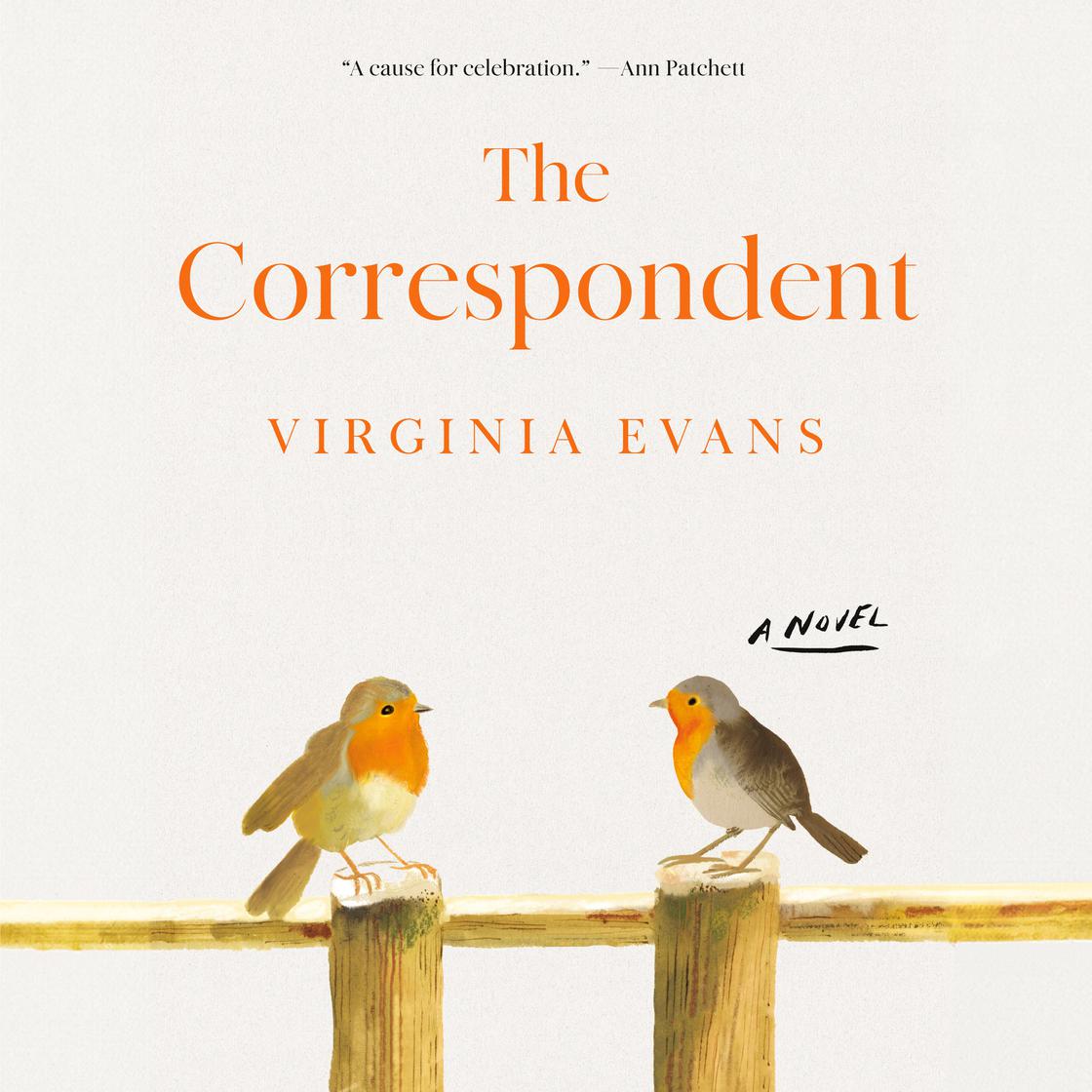
Pretty much every house I visited in the past month had a copy of The Correspondent by Virginia Evans perched next to a favorite reading chair. Even after listening to the audiobook (twice), I still said yes when a friend offered me her hard copy—because I wanted to figure out why this book has such wide appeal. Here are five takeaways that might help other writers achieve a similar rapport with readers (and don’t worry, there will be no spoilers).
1. Show don’t tell
The story is told entirely through letters, except for the short “A Preface” to introduce Sybil Van Antwerp, The Correspondent herself, sitting down at her writing desk. Years ago I tried to write an epistolary short story, and I still remember the insurmountable challenge: how to convey to the reader details that the scribe and her audience already know, while making it read like a normal letter?
The book opens with a great example: the first letter is addressed to “Felix, my dear brother.” That added phrase seems quite natural, but without it we’d be distracted by a question: who’s Felix? (He lives in France, and there will be many more letters addressed to him.) This one thanks him for his birthday gift, which provides an excuse for Sybil to share her age (73), and to update him on (and introduce us to) the other “characters” in the world of her retirement. A postscripted enclosed photo inspires her to remember/explain that they were both adopted (a key plot point).
2. Tie details back to bigger themes
As Sybil faces her final years, she often questions what she’s really accomplished. She always concludes that the hundreds or thousands of letters she’s written and received are her true legacy—because unlike emails, text messages, and “all the prattle sent mindlessly,”
…the letters one has sent out into the world, the letters received back in turn, are like the pieces of a magnificent puzzle . . . isn’t there something wonderful in that, to think that a story of one’s life is preserved in some way, that this very letter may one day mean something, even if it is a very small thing, to someone?”
Even as we gobble up her story, she’s pointing out the biggest theme of her life—and this book.
3. Surprise us
By the time I read that Sybil loathes her short stature (an inch shorter than me), I’d come to assume she was as physically large as the space she takes up on the page. Not so! Her pointless wish for more height matches my own, though her choice of shoes is quite different:
I don’t need to be six feet tall like yourself, but five foot five or six would’ve been nice. Five feet one inch is embarrassing for things like public speaking (which I loathe to begin with) and no self-respecting septuagenarian is going to wear pumps, though I will say I do miss wearing them.”
4. Unexpected protagonists can be fascinating
As an old (and short) woman, Sybil might be easily ignored out in the world . . . but her correspondents (both young and old) listen to her written advice. Though almost all of her letters are composed at the same desk, her opinions matter to a wide variety of letter recipients. Best of all, they often write back—because “people are just people. Famous or not.”
5. Find the perfect ending
I came to recognize the various voices of the audiobook, which created a tasty sense of “I know what’s going to happen next” when I heard an unexpected voice. There’s just enough explanation to create a satisfying close—which might be the most difficult part of writing any novel, especially an epistolary one.
I recommend The Correspondent for readers who enjoy a non-nostalgic reflection on the past, when letter-writing was THE form of communication and written communication was prized for its clarity and conviction and voice. I also recommend it for any author who dreams of writing an epistolary story; studying its structure might just help those of us who aspire to that.
Got a favorite novel you’ve reread for its writing lessons? Share it in the comments below, or send me an email; I read every single one, with gratitude. Thanks for reading, and see you next Thursday.