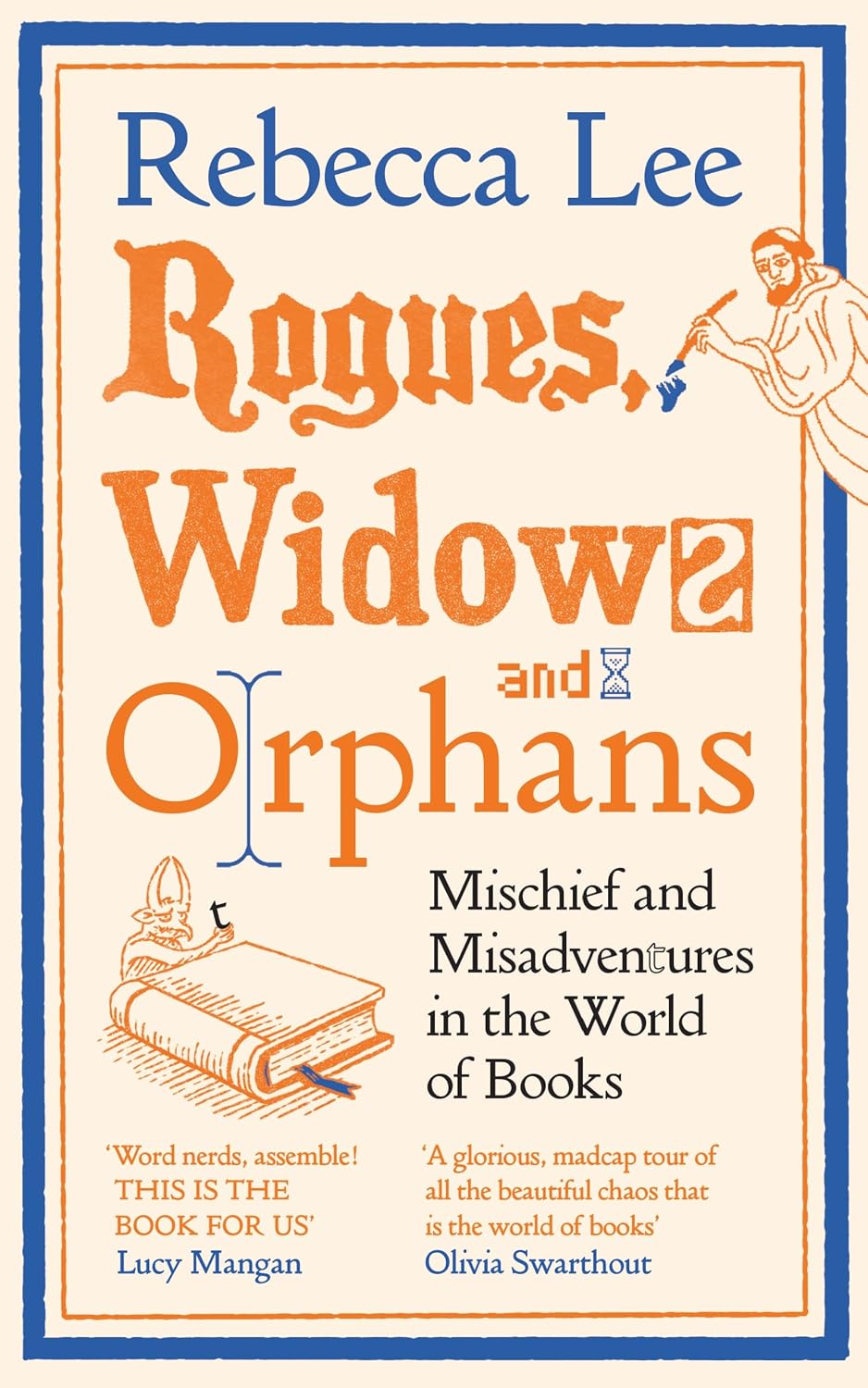
Just to clarify, I didn’t write this headline: it’s the complete title of a book I just devoured by Rebecca Lee. Although most of my reading consumption is fiction, how could I resist the cover’s promise of “A glorious madcap tour” and six chapters that all start with the word “Bad”?
Lee is a senior editorial manager at Penguin Random House, a job she describes as project management for books, so she’s weeded out a lot of “bad” in her time; her first book was entitlted Words Made Good. This time around she’s dug deep into literary history for stories about what she calls “glorious blunders.”
I found myself laughing out loud at her subtle turns of phrase—and reaching for a highlighter. Here are a few quotes that especially stood out.
Bad Taste: Welcome to Ick Lit
“Writing anything takes a certain amount of courage; showing it to even one person doubles the bravery needed, while publishing quadruples it, requiring nerves of steel and the ability to take criticism not so much on the chin as, well, all over your body.” After many examples of “bad writing” and a discussion of subjectivity, she points out that even when—especially when—writing breaks the rules, “the real joy is in the shared experience, the fervent discussion in the book club . . . the unifying power of a collective ick.”
Bad Apples: Plagiarism, Plunder, Pretence and Pranks
Reading allows us to enter an author’s mind, “using words that are portals to new ways of thinking and seeing. . . .” And “more than that, as readers, a book is a jumping-off point for examining ourselves and learning something about our own inner life.”
Bad Blood: Veins to Pick
The value and agony of reviews: “ . . . in a world where we’re all short of headspace, we need a sage guide to untangle where a book sits in time and space, and let us know whether it is worth our investment.” Later, she acknowledges that “all authors must now run the gamut of the World Wide Web—or the worldwide whinge. We’re all critics now.”
Bad Endings: Old Stories, New Chapters
In the final chapter, Lee points out that “Every new iteration of the book looks both backwards and forwards—adapting what has gone before, and adding a dash of new and emerging technlogy, often borrowed from seemingly unrelated fields. And because books are so culturally vital to readers, every upheaval . . . brings us a kaleidoscope of emotions.” That provides context for her speculation on whether books will survive AI: “One version of hell is to live in an age where you will never run out of free, accessible content to read—but none of it will be any good.”
Why the beheading?
Lee loves posing rhetorical questions, which aggravated one visual annoyance in an otherwise beautiful hardcover: the tops of all question marks are cut off. Trusting her editorial attention to detail, I expected some explanation. Instead, the only reference to format is a footnote explaining that the book is set in Doves Type. A mystery!
Thanks to my newfound appreciation of how much books have evolved already, I optimistically vote “aye” for their continued survival. And while this one was was well outside my usual summer reading, I look forward to more literary wisdom from Rebecca Lee. Rogues will be available in the US on September 8.
Got a story about a favorite read—or better yet, an explanation of headless question marks? Share it in the comments below; I read every single one, with gratitude. Thanks, and see you next Thursday.