If I told you I’d just devoured a book about a dying woman, you’d probably think it was dark and depressing. Somehow, Elizabeth Berg’s latest novel is instead hopeful—indeed, a Love Story about Life—even after the prologue warns us that the main character won’t survive.
I’ve been an Elizabeth Berg fan since the 1990s. Though I haven’t read all of her work (32 books and counting!), I didn’t love them all, but I probably wouldn’t have picked up this one if I didn’t recognize the author’s name. Days after finishing it, the characters and story are still pinging around in my head.
Florence Greene is 92 when she receives word from her doctor that she only has four to six weeks to live. That spurs her to write a letter to Ruthie, who grew up next door and is almost a daughter, explaining that she’s willing the house and all its contents to her. “I have about a month, maybe six weeks,” she says. “Did you ever think that a little interval of time like two weeks could mean so much?”
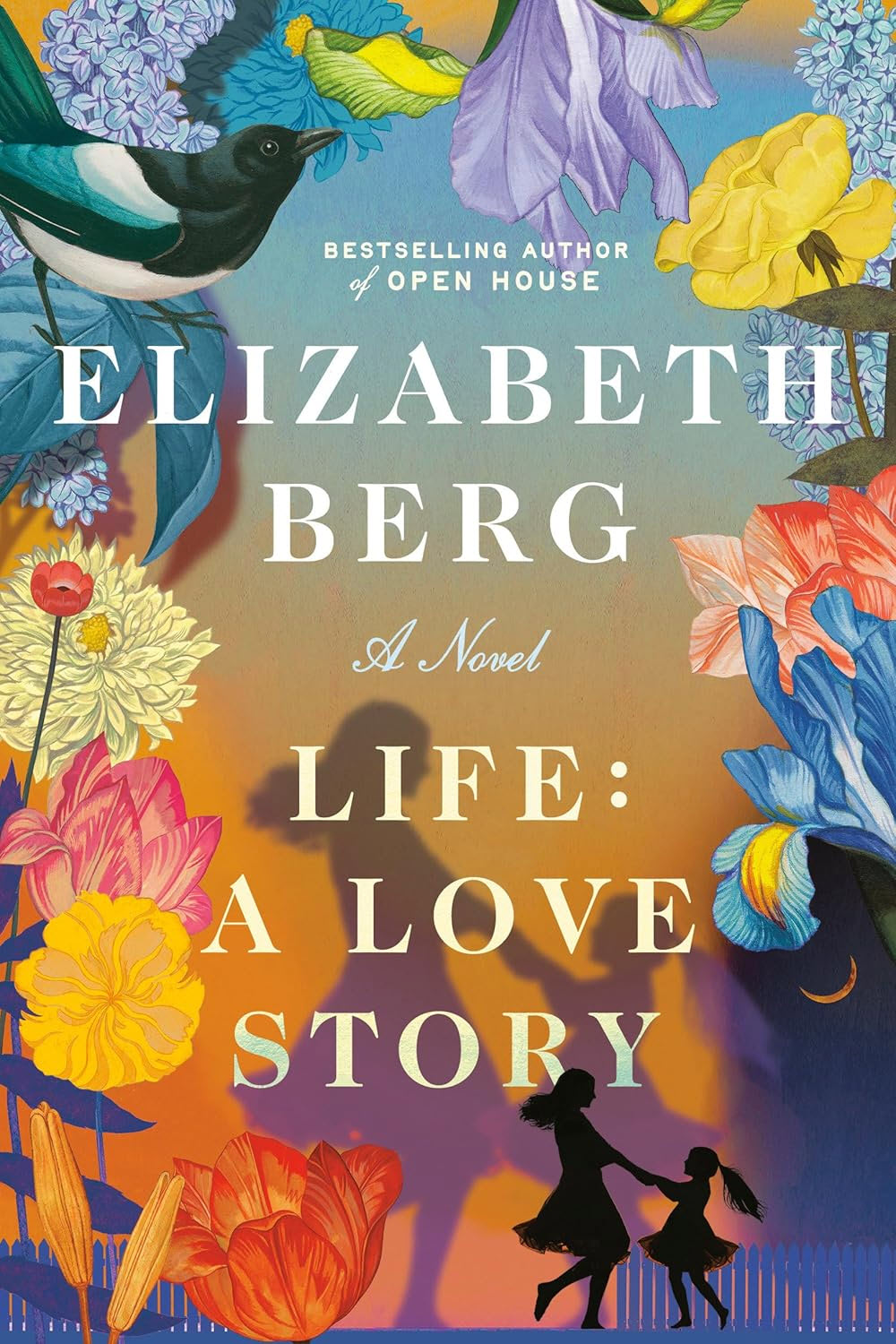
It’s not clear exactly where Flo’s quiet suburban life has played out, but it doesn’t matter because the details of her happy marriage and the seemingly unimportant items around her house are so universal. As she says to Ruthie, “You can do with my things whatever you like but I just think you should know that they are not just objects, but pieces of my life that point to something bigger than my life. I’ll tell you what, a rubber band is not just a rubber band, as you will come to see.” (Notice how that repeated “just,” which I probably would’ve edited out, helps build her distinctive voice.)
After admitting that her husband Terrence “and the good Lord” both warned her that she cared about her things too much, Flo remembers a specific disagreement with Terrence when “we just let that one go, which if you ask me is 99% of a good marriage, knowing when to let something go.” She also promises to reveal a big secret, a fantastic piece of foreshadowing that hovers beneath all of the seemingly less important details she describes first.
On her website, Berg offers up the original inspiration for each book. Here’s what she says about Life: A Love Story:
Did you ever go to an estate sale and wonder about the meaning of certain things? Did you ever feel you could get a picture of who the people were because of their artwork, their flatware, their clothes, their embroidered tablecloths, the contents of their jewelry box, their wallpaper? That was the inspiration for this book. But it turned out to be much more than that, ending with Flo’s coming to a kind of wide gratitude that I hope will inspire others in their efforts to find joy in and appreciate their own lives.”
She succeeded, thanks to snippets like this one: “Another day. The wealth of it!” And the ending is both more real and more optimistic than I expected. This would be a great book club read, if only as an example of that most elusive of writing and reading joys: a distinctive voice.
Elizabeth Berg communicates big ideas through the careful selection of details—a rubber band is indeed not “just” a rubber band. I’m also impressed by her output: 32 novels in 33 years! I recommend this book for anyone contemplating their own mortality—which is, I would guess, most of us.
Thanks for reading, and see you next Thursday.