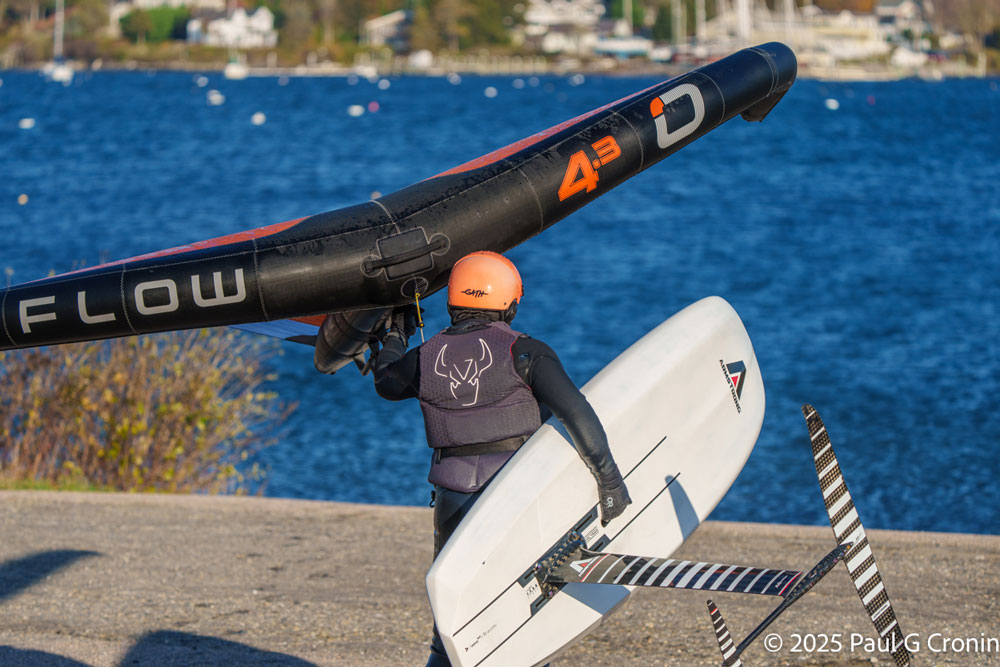
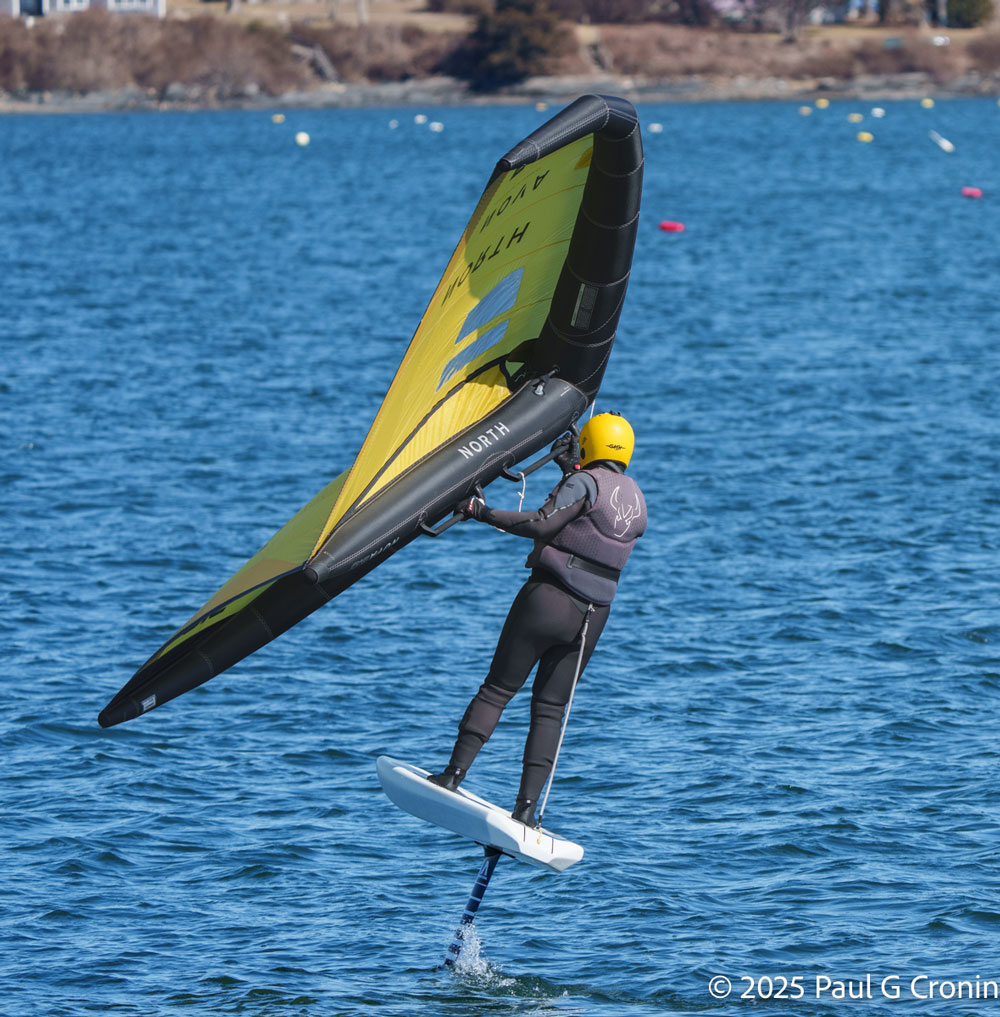
As faithful readers already know, watersports are a year-round joy in our house. Standup paddling used to be my cold-weather water escape, but last winter, whenever midday temperatures rose above 45 degrees and the breeze was over ten knots, I’d take a break from my desk to go wingfoiling. (Read How to Keep Wingfoiling this Winter)
What makes winter foiling possible comes down to one word: neoprene. As water and air temperatures drop, I regretfully muscle on a thick wetsuit, boots, and gloves. Though I don’t fall as much as I used to, I still have to wade into chest-deep water to launch. By the time I’m up and moving, pretty much everything from my neck down is wet—and unlike standup paddling, there is always the frosty bite of wind chill.
Glove Go-To
Except for dressing/undressing, it doesn’t matter how thick my wetsuit and booties are—but my hands need to remain limber enough to handle board and wing. Numb fingers are no fun, and there were a few times last winter when I found myself in tears after sailing as blood flow painfully returned. Which is why, sooner or later, every winter wing foiling discussion comes back to one question: “What gloves are you wearing today?”
I’ve tried a variety of thicknesses and brands, and my absolute favorites are Rooster’s Combi gloves. Basically it’s a full-finger sailing glove with a fleece-lined mitten that can either be pulled over the fingers or tucked away. Though I pretty much always use the mitten, I appreciate the easy access to improved dexterity; I can undo my waist harness buckle without removing my gloves, and could probably even untie a knot if needed.
Less Grip, More Warmth
My Rooster gloves allow me to sail “normally,” manipulating the wing just like I would do bare-handed. On the chilliest days, however, I step up to Hyperflex Oven Mitts. Even at 7mm, they are surprisingly soft and pliable, and they definitely keep my fingers warm. But they do take away quite a bit of the dexterity that is key to confident maneuvers, so I only wear them when the alternative is numbness and tears.
I have tested thinner gloves—including my old-school frostbiting solution, thin polpro liners covered by the most durable dish gloves I could find. Unfortunately the wind chill is a much bigger factor at 15 knots than it is in a pokey-slow Interclub, so after searching in vain for a “shoulder-season” solution I just go straight from bare hands to Roosters.
Feels Like
One of the many learnings from last winter’s wingfoiling is that it’s not the water temperature that matters; what really makes the difference between comfort and crying is just how biting the air is that’s blowing across all of my wet neoprene. Which means that no matter how cold the water gets, whenever the air temp rises over 50 degrees, the sailing is spectacular—especially with the right gloves for the job.
Got a favorite piece of winter sailing kit? Share it in the comments below, or send me an email. I read every single one with gratitude. Thanks for being here, and see you next Thursday.
Thanks to PaulCroninStudios for the photos!
Winter foiling. I must be getting softer as I enter my 71st year, or it’s getting colder earlier this year. I moved up to a 7mm front zip wetsuit and 7mm boots. The integral hood in the wetsuit is a plus and replaces my summer helmet. Gloves are typically 5 mm. I am starting to experiment with googles to stop eye watering but no recommendations yet.
I ride an efoil on many occasions as winds are fickle in the southern part of the Chesapeake Bay, and this is done in the local rivers launching from a public slip. Not ideal wing foiling locations however. My wingfoiling is generally very limited unless I travel.
Wing foiling equipment is Armstrong board (135l) and foils with various wings from 8.0 m to 3.5m. The efoil is a Lift 4 4’8” pro.
Paul, good on you for joining the crazy winter foiling group. Wow 7mm wetsuit, I’m impressed! I haven’t tried efoiling yet but it sounds like a good fit for your location. Maybe see you down south this winter?
Hi Carol, I’m not joining you on the wing foil anytime soon but as a fellow New Englander facing down outdoor activities this month, I’d love to see a photo of your Rooster and Hyperflex gloves!
John, to throw back an acronym I learned from you: JFGI! 🙂